|
A spoonbill crane joins some sea gulls above the tip of
the Otaga Peninsula near Dunedin. |
A winter 2023 trip took us to summer in New Zealand. Days before we arrived on Feb. 2, Auckland was hit by an atmospheric river that dumped inches (OK, centimeters) of rain, flooding streets and closing the airport where even part of the terminal was flooded. We left after three nights for a 10-day sidetrip to Tasmania. While we were gone, Cyclone Gabrielle struck, bringing more rain to the North Island and causing Katrina-level damage to the Hawkes Bay wine area and to the town of Napier, where we had planned to spend a few days. In fact, when we returned to New Zealand on Feb. 16,, we had to deal with storm-closed roads just getting to the Coromandel Peninsula, well north of Hawkes Bay.
The weather didn't just disrupt our itinerary, it dampened many days in various areas, sometimes with pelting rain and strong winds. The two umbrellas we traveled with did not survive to return home.
All that said, we did have many good days in New Zealand, sunny and cloudy, walking facinating trails, seeing amazing scenery and tasting many, many good wines. And we ate too well, with farm-raised venison being something of a revelation, and wallaby (they're wild in the countryside around Christchurch) being something of a novelty. Not to mention lamb. Or beef. And French-quality cheeses. We saw literally thousands and thousands of sheep, dairy cows and beef cattle almost every where we went, Livestock greatly outnumber people in New Zealand. By the end of the trip, though, we felt we were seeing the same menu over and over: slow-roasted lamb, beef steak, farm-raised salmon, and a vegan option, usually roasted cauliflower. And often enough, venison.
We did not see any kiwi birds, though a wildlife center in Franz Josef apparently has some in an indoor pen for tourists to see. At Zealandia in Wellington, we saw the extremely rare takahe, a large flightless bird (sort of like a dark blue chichen) that was once thought to be extinct, along with many other birds and the tuatara lizard (or is it merely a lizard-like reptile?). We saw little blue penguins swimming in the sea near Dunedin, and at the Royal Albatross Centre we saw the wild northern royal albatross and white-capped albatross. We saw rare (thought to be fewer than a thousand in the world) yellow-eyed penguins at Penguin Place, a penguin rescue center, but a hike to a shore where they nest didn't yield any sightings. In Auckland, on our last day in the country, we visited Kelly Tarlton's Sea Life where we saw dozens of captive king and Gentoo penguins.
Our most formal wine exploration was in Marlborough (source of most New Zealand wine sold in U.S.) where we stayed in Blenheim and took a tour of nearby cellar doors (tasting rooms). We visited others on our own. But it was outside Queenstown that we found a winery (Amisfield) that would ship "free" to the U.S. Fortunately, theirs were some of the best wines we tasted, especially the pinot noirs. They maintain a warehouse near Santa Rosa, California, for supplying their wines to U.S. restaurants, and our mixed case, though selected at the winery, was shipped to our home from that warehouse.
We tried to arrange our trip so that we'd never have a drive longer than five hours. It usually worked out that we'd leave one place after breakfast and be in the next one in time for a late lunch. We used Hertz for rental cars on the North Island (a Nissan Qashqai) and the South Island (a Mitsubishi Outlander). Driving in New Zealand is the same as in Australia, on the left side of the road. Here's our itinerary for New Zealand:
Auckland, three nights at Debrett Hotel. We arrived February 2 after a few days in Honolulu. Debrett is a venerable but funky small hotel near the harbor with little more than a reception desk at ground level, but one floor up there's a bar, restaurant and rooms. We did an 11-night (10 full days) sidetrip to Tasmania, Australia, returned to Auckland on February 16 and this time stayed one night at the Hotel Fitzroy, an inn in the trendy Ponsonby neighborhood. The next morning we picked up a car at Hertz's downtown location near SkyCity and drove to the storm-battered Coromandel Peninsula. On March 15, we returned to Auckland for our last night in the country and again stayed at Debrett.
Hahei, three nights at Tatahi Lodge. This is on the very scenic Coromandel Peninsula. The hotel equips each room with a shovel. This is for digging down to painfully hot water at nearby Hot Water Beach, where at low tide the water from a hot spring beneath the sands can be collected in pools, diluted a bit by waves, and used as soaking tubs. You have to know where to dig, which is as close as possible to where anyone else has struck hot water. Here we dined well at the Church Bistro and at Hotties, which overlooks Hot Water Beach.
Taupo, one night at the Gables, one night at the Reef Resort. Our planned three nights in Napier wiped out by the cyclone, we competed with other displaced travelers for rooms elsewhere. We could not get three consecutive nights anywhere. Taupo (TOE-paw) is a holiday town for New Zealanders, complete with "the world's coolest McDonalds," jet boats, para-waterskiing and other attractions. One restaurant I can recommend is simply named The Bistro.
Martinborough, one night at the Martinborough Hotel. In talking with the American-born owner of Hotties at Hot Water Beach, we mentioned we were rerouting from Napier to Taupo for two nights and another in Palmerston North, a town on the way to Wellington. He said Palmerston North was like Queens, New York. Jane said she was from Queens, and he responded, "So you know." Martinborough turned out to be a nice wine town, the hotel turned out to be antique and charming (and with a good restaurant), and nothing reminded Jane of Queens.
Wellington, two nights at the Intrepid Hotel. This was another funky small downtown hotel. It was close to the harbor, close to lively Cuba Street and had its own wine bar serving only organic wines. Wellington is on Cook Strait, which separates the North and South Islands. After this it would be adieu to the North Island. We had a very good Friday night dinner at Highwater Eatery, a block or two from our hotel. Walking back on the pedestrian-only part of Cuba Steet, we encountered a crowd listening to a large jazz ensemble with an amazing brass section. The next morning, heading to the airport, our driver explained that the well-known local band plays there almost every Friday.
Blenheim, three nights at the 14th Lane Urban Hotel. Another wine town where the town itself is of little interest, but some of the wineries outside it are among the world's best known, and some of the little-known ones are excellent. 14th Lane was comfortable and friendly (the owners did a load of laundry for us without charge), and there were decent (and one decidedly odd) restaurants nearby. We enyoyed our meal at Frank's Oyster Bar (and when Jane left behind her San Diego Zoo baseball cap, they were kind enough to return it across the street to our hotel), but we were more baffled than fed the next night at nearby Scotch, where I think the extremely small plates are intended more as entertainment than nutrition. The nearby town of Picton, where ferries from Wellington come in, is more touristy with loads of restaurants and shopping.
Pohara, two nights at the Bay Lodge. This was by far the prettiest place we stayed. Our large, nicely furnished room opened onto our private terrace built over a water garden and with dazzling views of Golden Bay. Nearby are some of New Zealand's most beautiful beaches, Abel Tasman National Park, a huge freshwater spring, and the hippie-dippy town of Takaka. The owner gave us good advice on visiting a beach that we otherwise would not have found, as well as a huge freshwater spring. A good dinner and then breakfast on our way out of town was at the nearby Ratanui Lodge.
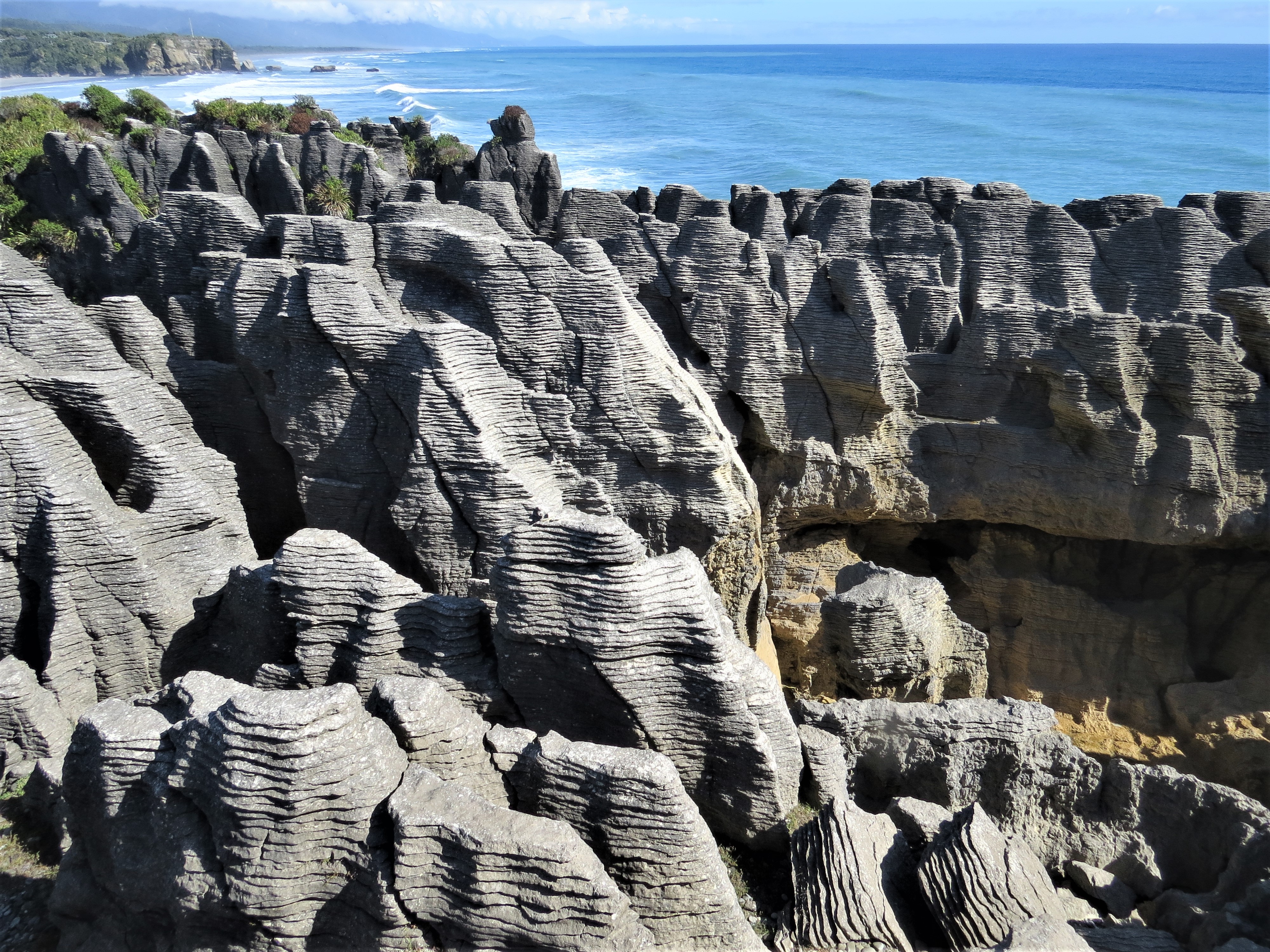
Punakaiki, two nights at Ocean View Retreat. Here the attractions are Pancake Rocks, tidal surge pools, a cavern with gloworms and, of course, beaches. I imagine this is a place few vacationing New Zealanders would stay more than one night. We stayed two nights and still Ocean View would not move us from a below-grade room across the street from the ocean. The rooms on the level above ours probably had very good views. We could see only dense shrubs and underbrush.
Franz Josef, two nights at 10 Cottages. The singular attraction here is Franz Josef glacier, which visitors can see after hiking to a lookout point, or walk on if they're willing to pay for a helicopter tour that includes a landing on the glacier. Again, this is probably a one-night stop for most people. There are two restaurants of note in town. We much prefered Blue Ice over the better-known Alice May, which is named for an interesting murderer and is owned by her granddaughter.
Queenstown, three nights at The Central. This is an adventure destination. Bungee jumps, canyon swings, jet boats, para-sailing, mountain biking, and so on. It's an extremely touristy town, though I imagine a lot of New Zealanders have second homes here. Queenstown is on the shore of a large lake nestled in the Southern Alps, which are just as beautiful as Europe's Alps. One person we met described it as a cross between Switzerland and the Canadian Rockies. There are also a few wineries outside town. For our first dinner there, at The Lodge, I had a game meat pie made of wallaby, goat and hare. Sort of a like an oversize beef empanada. My strongest dining recommendation there would be Margots, a Mexican place (no sangria, though) where I enjoyed a beef-cheek steamed bun and Jane had a duck taco. A snack recommendation would be one of the cheese boards at The Winery, where a large number of wines are availble for tasting or by the glass.
Dunedin, three nights at Ebb-Dunedin. This is a lively university town with the world's only mainland-nesting albatross out on the Otaga Peninsula. The Ebb is a new hotel in which all rooms are reached by walkways around a four-story atrium, the bottom of which is a driveway to the hotel's incredibly cramped parking area. The city is centered around an octagonal green and that's where Bacchus Wine Bar is. It's where we had deep-water Bluff oysters for the first time. Meaty, firm and, I think, the best oysters in the world. Outside town, Doctors Point has sea caves that are dry at low tide. There's also Tunnel Beach, which involves an amazingly long and steep track down to the shore and then back up.
Christchurch, three nights at the Observatory. The hotel is carved out of former University of Canterbury buildings that include an old observatory. Fellow tennants in the Gothic Revival stone complex include a wine restaurant, an arts center and a movie theater. Attractions in Christchurch include a world-class botanical garden and the Cardboard Cathedral (erected after the 2010-11 earthquakes leveled the town's Catholic and Anglican cathedrals). We arrived on Sunday, March 12, in time to see a colorful (think dogs wearing multi-hued tutus) parade celebrating Gay Pride Week. We turned in our rented Mitsubishi right after checking into our hotel and were on foot our whole time here. We had two dinners at King of Snake, a very popular Asian place. The first time was a Sunday and, with no reservation, we felt lucky to get seats at the bar. We made a reservation before we left for Tuesday (our last night in Christchurch) and got a real table this time. That Monday we had dinner in the same former university complex as our hotel, at Cellar Door, a wine bar with a full dinner menu.
Auckland, one last night at Debrett Hotel. This was March 15. We flew Air New Zealand from Christchurch to Auckland, and took a cab into town. Since our Hawaiian Airlines flight home the next day was supposed to leave at 11:35 pm (the Debrett held our luggage from the time we checked out until we called a cab to go to the airport), we had two final dinners in Auckland, both at places we had visited before: Huami, a Chinese place at the foot of SkyCity, the tower that dominates the skyline, and Oyster and Chop, a very popular harborside restaurant. Huami was swamped by a big group eating on its terrace and the poor service and barely-warm food made for a disappointing meal, especially disappointing since a lunch there during our earlier time in Aukland had been wonderful. Oyster and Chop, however, however, was as good as we remembered, and this time they had Bluff oysters, which were great even at 50 percent more than the price of regular Pacific oysters.
Our Hawaiian Airlines flight, after that dinner at Oysters and Chops, was delayed two and half hours., giving us time to spend all our unused New Zealand currency.
Here are some photos from the trip:
.jpg) |
Auckland's skyline as seen from the harbor. The needle-like tower is SkyCity.
|
 |
At Hot Water Beach on the Coromandel Peninsula,
people who are lucky enough to find
hot water get to soak in it. |
 |
We ended up spending one night in Martinborough by chance. If we had known
how nice it is, and how good its wineries are, we would have stayed longer.
|
.jpg) |
A funicular railroad takes visitors high above downtown Wellington. At the top, there's
a free shuttle bus to Zealandia, a must-see wildlife sanctuary. |
 |
The cellar door at Gibson Bridge Vineyard, perhaps
the only winery in all of Marlborough that doesn't
make sauvignon blanc. |
 |
Our terrace at the Bay Lodge in Pohara has a water garden and
views of Golden Bay. |
 |
Our innkeeper at the Bay Lodge said that nearby Wharariki Beach is the most
beautiful beach in the world. I wouldn't want to argue with him. |
 |
Pancake Rocks at Punakaiki. Geologist are said to
be puzzled about how they formed. |
 |
Our cottage at 10 Cottages in Franz Josef.
The plants are fern trees, which can grow
to be as tall as palm trees.
|
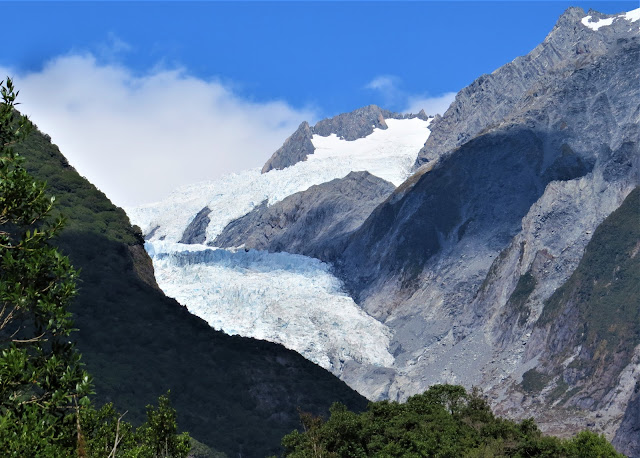 |
Franz Josef Glacier, which is shrinking rather rapidly, can be seen from trails
in the nearby mountains. Helicopter tours land on the glacier to allow
tourists to walk on it, but we didn't do that. |
 |
The busy waterfront in Queenstown is lined with restaurants, bars and souvenir shops.
|
 |
A sea cave at Doctors Point near Dunedin is
dry at low tide. |
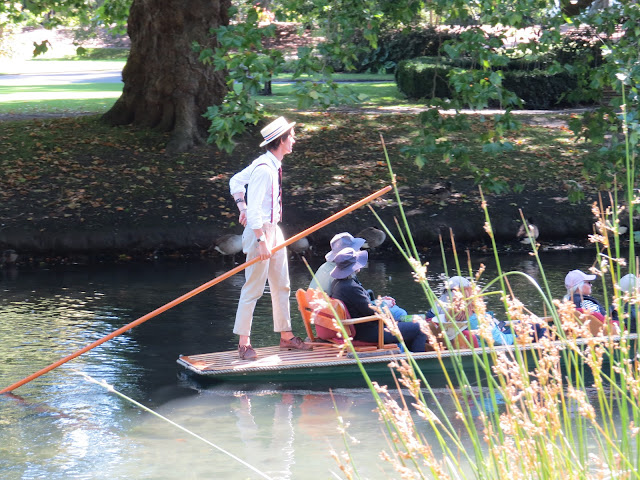 |
Christchurch must tbe he most English-like city in New Zealand. These people are
on the River Avon, which separates Oxford Terrace from Cambridge Terrace.
Many buildings are in the Gothic Revival style that echo similar
buildings in England. (Dunedin, on the other hand, is very
Scottish, complete with a statue of Robert Burns.) |




.jpg)


.jpg)