Tourist First

Travel notes and advice from around the world. Above, the daily flight from Managua at the San Carlos, Nicaragua, airstrip.

Saturday, August 2, 2014

France: A Grand Few Weeks

      If you've seen my earlier postings from France, you know that Jane and I spent a few weeks there in late May and June, 2014.   Our itinerary: Paris, Strasbourg, Eguisheim (a wine village in Alsace), Beaune (in Burgundy and convenient to wine centers such as Nuits Saint Georges), Lyon, Orange in the Rhone Valley, Marseilles (where daughter Katy joined our adventure), Albi (in the Midi-Pyrenees), Sarlat in the Dordogne, Bordeaux, the Loire Valley, and back to Paris.
       Paris, the Loire Valley and Bordeaux were dealt with in the earlier postings.  Here are snapshots from the rest of the trip.
Cafes and shops make for a lively street scene in Strasbourg.

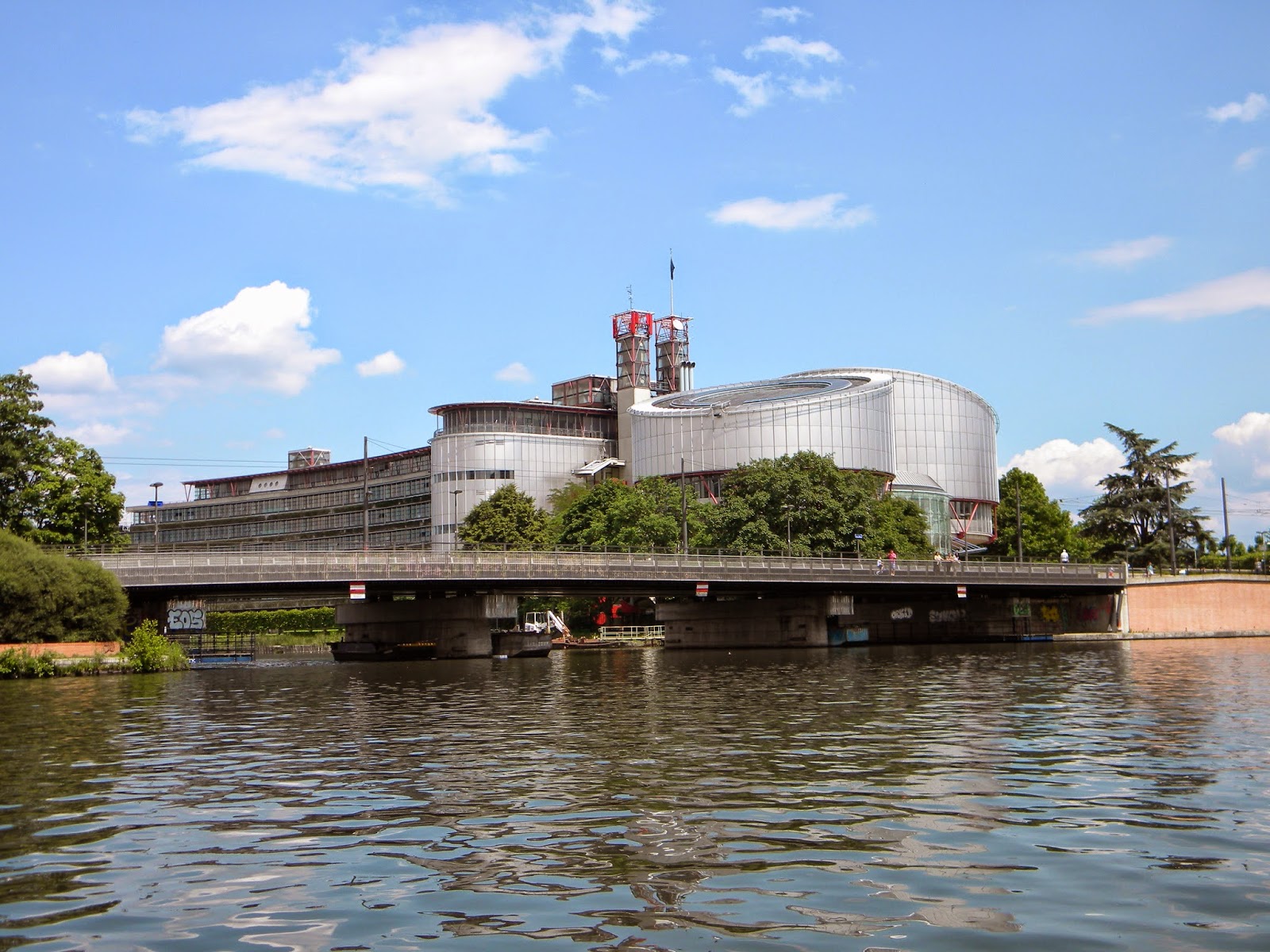
E.U. government buildings along the Ill River in Strasbourg.
Sight-seeing boats on the River Ill in Strasbourg.
A section of Strasbourg's riverfront is lined with artfully pruned trees.

Above: A street in Eguisheim.
Below: Traditional green-stemmed Alsatian wine glasses.  The "Gendarmerie" sign is fake -- it
was one of several fake building signs used in a movie  or TV shoot that happened during our
stay in Eguisheim. It was taken down before we left.


Above: A a stork nests atop
a steeple in Eguisheim. 

Left: Painting houses in bright
colors is a post-World War II 
phenomenon in Eguisheim. 
Streets like this form 
concentric rings around the 
church and chateau in the 
middle of the village. The
outer ring was the 
village's ramparts. 
Old glass panes distort the view through this window in Eguisheim.


Left: A street in Beaune, a wine 
center in Burgundy.  


Below: The cave at Chateau 
de Premeaux just outside
Nuits Saint Georges. 
The barrels hold the 
chateau's 2013 pinot noir.


A Dali sculpture at Chateau de Pommard, one of Burgundy's greatest wineries. 
 This is Dali's take on Saint George killing the dragon, a popular theme in Nuits Saint Georges.

We couldn't help but tour a few churches in France, including the Basilica Notre Dame de Fourviere,
which sits atop the highest point in Lyon.  It was built in the late 19th century when the Catholic Church
was trying, unsuccessfully, to reassert itself  in public life despite the anti-clerical Third Republic.
 It overlooks most of the city, including the magnificent 12th-century St. Jean Cathedral (not shown).

Below: The Lumiere Brothers museum in Lyon, which is housed in 
their father's mansion.  The brothers invented, among other 
things, projected moving pictures. One of their 
short films can be seen in Martin Scorsese's "Hugo."


Right:  A flea market on a 
square in Lyon's old town. 
  On the hill is the Basilica
 Notre Dame de Fourviere


Above: The Rhone River wends its way south of Lyon toward the Mediterranean.  
Below: A bas relief carving of a battle scene atop an ancient Roman-era arch in the town of Orange,
 which also has a 9,000-seat Roman amphitheater (not shown). 


Right: A rocky vineyard at
 Chateau Mont-Redon,
which produces, among
 other wines,a good
Chateauneuf-du-Pape.


Left: A large fountain greets
motorists driving into the historic
center of Aix-en-Provence,
a town overrun by tourists.
We stopped here for lunch
on our way from Orange
to Marseilles.


Above and below: Our chambres d'hote (bed and breakfast) in Marseilles had a great view of the Mediterranean
 and a pretty nice continental breakfast. The owner asked that we not mention its name online
or on Yelp or Tripadvisor  (though that is how we found it) because she prefers
guests to find her by word of mouth. 


Below: Jane enjoys a view of the Marseilles harbor.  We walked here from the chambres d'hote.
Below: Drinks at an outdoor cafe in Marseilles.
Next round we followed Katy's lead and went with mojitos, 
which became the official cocktail of this vacation. 

 Above: The reflective ceiling of Norman Foster's stainless-steel pavilion at the harbor in Marsaille's old quarter. 
 Above: Another church. This time it's Notre Dame de la Garde,
 built in the 1850s on the highest point in Marseilles by Napoleon III.  
It's adorned with hanging planes, warships and other references
 to Marseilles' war-torn past. 
 Above: We walked from our chambres d'hote to this city beach.  We were surprised 
to find such a pleasant beach in such an urban area -- the water and the sand seemed quite clean.
 Above: A diver is in midair at one of the calanques -- small rocky coves -- east of Marseilles.
 These swimming spots are hard to reach by land, often requiring long and steep hikes. We saw them by boat. 


Right: Our last dinner in Marseilles
 was at a pizza restaurant in
 Vallon des Auffes, a small
 fishing port hidden on the
 city's waterfront that looks
 like a movie set.  Again, we
 walked here from our lodgings,
  but for the long, uphill trip
 back we took a cab.


,,.,.,.
Above: St. Cecile Cathedral in Albi, a small town in the Midi-Pyrenees. The cathedral was built in the
 13th century as a show of force by the Catholic Church after wiping out the Cathars, a sect that
 the church considered heretical. Its fortress-like exterior, made of red bricks, dominates the town. 
Above: The church's interior is a surprising change from the severe exterior. In the 16th century, 
Italian artists were brought in to cover almost every surface with religious scenes.
It's said to be the largest group of Italian Renaissance paintings in a French church. 
Below: A side chapel in the cathedral. 


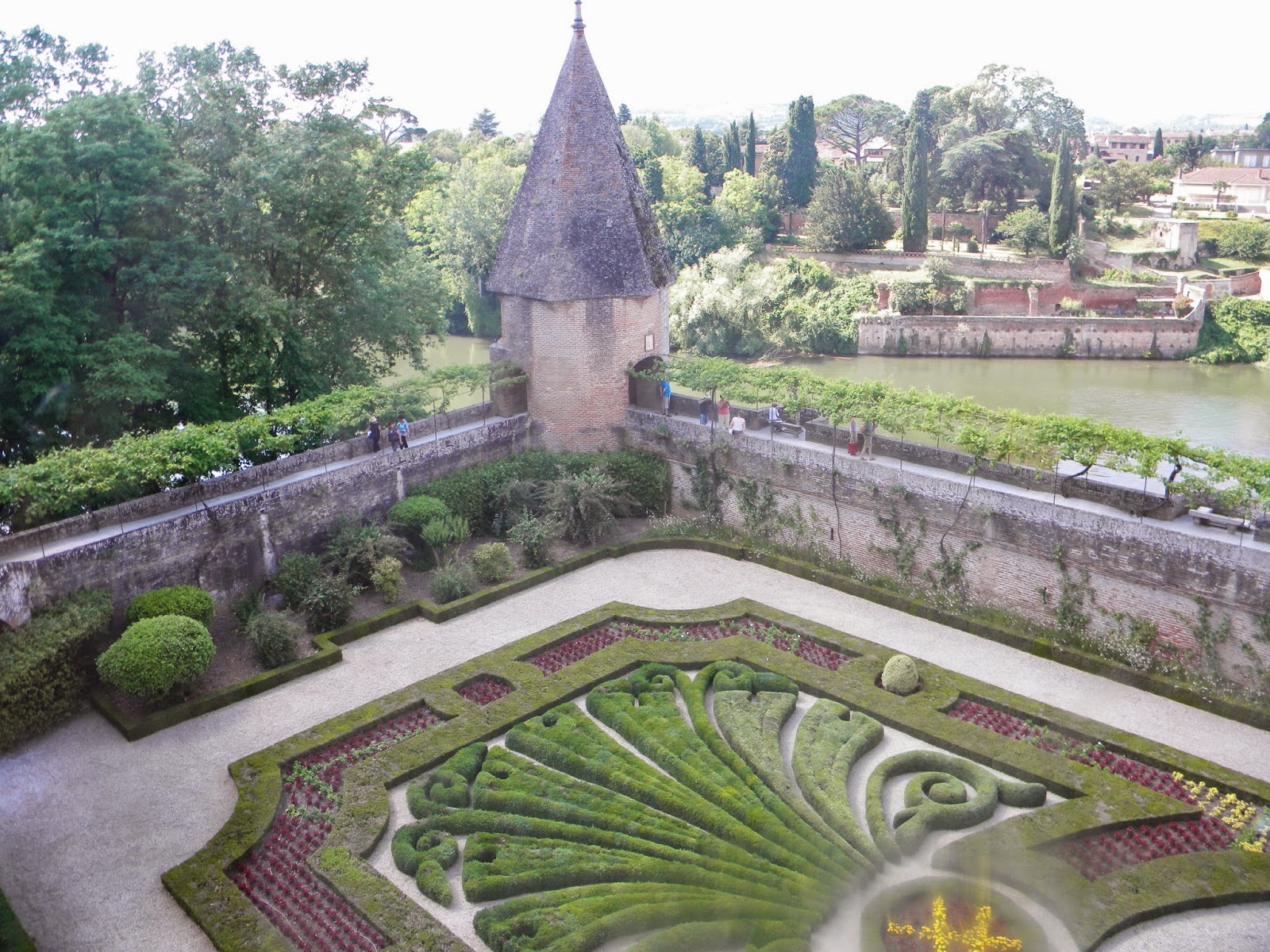
Above: A garden at the Berbie Palace, the residence of archbishops in Albi and adjacent to the cathedral. 
Today the Berbie Palace houses a museum totally focused on Albi's most famous son, the artist
Henry de Toulouse-Lautrec.  In addition to his celebrated posters advertising night clubs in Paris,
 the museum has many of his early and more serious works.

 Above: Rocamadour, a village that clings to a cliff overlooking the Dordogne River.
It's the home of the goat's milk Rocamadour cheese.
Below: A view from the top.  The walkway on the left links the chateau at the
top with the church halfway down and the village at the bottom.

Left: Another view from the top of Rocamadour.

Above: Paella for sale in Sarlat-la-Caneda during its Saturday morning market.
 This was almost directly in front of our little hotel.
 Above: The Sarlat market -- lots of clothing was offered for sale.
Below: The Dordogne region is known for its fois gras, and there was plenty for sale at the Sarlat market.

Above: The main street in La Roque-Gageac borders the Dordogne River. 
 This picturesque village was a few minutes' drive from Sarlat.

So that (plus what's in the postings below on the Loire Valley, Bordeaux and Paris) 
was our trip to France this summer. Paris was very crowded; Lyon, Marseilles and 
Bordeaux were surprisingly pleasant; and we got to visit a lot of winery tasting rooms, 
even in Burgundy and Bordeaux.  We saw more of France in a few weeks than I saw
 in the early 1990s when I lived in Paris for a year and a half. Would I go back? 
 Probably not -- there are so many other places to visit that we've not seen.

Thursday, July 24, 2014

Nicaragua: In the Solentinames, a Photo Project Captures Children's Views

  
A selfie from "Miradas de Solentiname." 
  In 2012 I visited the Solentiname Islands in Lake Nicaragua, the body of water that is part of a just-announced plan for a Chinese-built Atlantic-to-Pacific canal across Nicaragua.  I wrote an article for The New York Times about the islands that you can read by clicking HERE.
         Much of my article dealt with the islands’ artistic output – balsa-wood carvings and primitivist paintings – which began in the 1960s under the direction Ernesto Cardenal, a poet and Roman Catholic priest whose landmark book, “The Gospel in Solentiname,” reveals an approach to the scriptures similar to that of the current compassionate pope (and a world away from that of most American bishops).
        Now Cardenal, who lives in retirement in Managua, is helping to promote a new art form on the islands, photography, by writing a prologue  to the book “Miradas de Solentiname” (“Solentiname Reflected”), produced by Tiago Genoveze.   Tiago, a Brazilian, moved to the Solentinames in 2010 to teach digital photography to island children and teens. They took more than 60,000 photos, some of which are in the book.  The book and a website (click HERE for the website) were made possible by a grant from Hivos’ Actors for Change Program (click HERE for its website).
A Lake Nicaragua water taxi, from "Miradas de Solentiname." 

       Tiago is looking for help in publicizing this project – which depicts the way the islands are now, before a Chinese company starts construction on a needless canal to compete with the one in Panama (click HERE for my posting on the Panama Canal).  The proposed canal would undoubtedly change, in a bad way, the ecology of these islands and the lives of islanders. Click HERE for some of the reasons this canal is a very bad idea.
      Ernesto Cardenal writes in the book’s prologue: “These pictures … compose a collective panorama of the archipelago as seen from within. The children with cameras in hand were like mirrors of their own reality, in which reality there are surely few mirrors, often small and stowed away, within the poor houses. The kids were itinerant mirrors, says Tiago. They took pictures everywhere they went and showed them to everyone who happened to be nearby.”
        The book, in Spanish or English, can be downloaded for free as a PDF file directly from the website (click HERE).  A thousand copies were printed in Nicaragua, all of which are being distributed for free among workshop participants in Solentiname as well as artists, educators, social activists, and NGOs that work with children across Central America. Tiago hopes that the free distribution will encourage artists and educators to use the book as a teaching tool.  Everything has been published with a common license that allows anyone to share the work as long as it is not being sold commercially. 
              Please pass along information about this project to anyone interested in Central America and Nicaragua in particular.  

Thursday, July 10, 2014

France: Bordeaux, Wine Capital

     We had heard little good about the city of Bordeaux, population about a quarter-million, so we were pleasantly surprised to find a sunny, low-rise city with a lot of its 19th century (and older) buildings intact and in use, a modern light-rail system, and one of the liveliest restaurant and bar scenes anywhere.
The Port de Burgundy near the Garonne River. 

     We arrived on a Sunday, but just a little too late for the Sunday morning market along the Garonne River. We found a spot in an underground garage for the car and walked a few blocks from the river and stumbled upon La Mere Michel at 22 Place Meynard, just across Place Saint-Michel from an ancient-looking stone church.  This decidedly unchic cafĂ© served Katy and me perfectly cooked confit de carnard. Jane said her salad with duck meat was excellent.  Perhaps our best lunch in France.        
Modern mass transit contrasts with Bordeaux's stately buildings.
     After lunch, we retrieved our car and drove across town to our chambres d’hotes (B&B), L’Arene, which was conveniently located and had a parking spot for us in a nearby garage. (An August 2024 Internet search for L'Arene showed that it has since closed permanntly, though I imagine the building itself has or will find new life as another inn.)  We could easily walk everywhere we wanted to go in the city.
      One must-do for warm-weather visitors should be the long strip of outdoor restaurants on the edge of the city center, where we found ourselves our first night. It was during the early days of the World Cup in Brazil when France was still in contention, and giant TVs were everywhere showing the game to cheering and drinking locals.  Most of the cafes – think of pop-up brasseries – served rather simple fare, such as the oversize hamburger I had. But they had fairly extensive wine lists and lots of beers on tap.
Weather permitting, it seems almost everyone eats outdoors in Bordeaux.
     
Pauillac is on the Gironde, the estruary of the Garonne and Isle rivers.
  We spent a good part of our only full day in Bordeaux about 45 minutes north in Pauillac where we had an appointment for a tour and tasting at the Lynch Bages winery.   There were only six of us on the tour, so we feel like we got a fairly close look at this celebrated winery.  The tasting, which included a 2004, was a highlight of our trip.  Strongly recommend that anyone visiting the region make appointments ahead of time to visit at least a couple of wineries.  Our second Bordeaux winery was Gruaud-Larose, a much smaller operation and one where
The view from our window at L'Arene in Bordeaux. 
we could afford to take home a bottle. Gruaurd-Larose is a Saint-Julien second cru.  Most Bordeaux wineries can be contacted through their websites. If you want to visit one of the First Growth estates, you should make a reservation as far in advance as possible.
               This being the Bordeaux wine region, there is a citywide focus on wine.   We found two great spots for enjoying wines.  The first is simply named the Wine Bar, located in Le Boutique Hotel. Click HERE for its website.  The waiter, who may well have been the owner, spoke with us at some length about what kinds of wines we liked before choosing wines for us without telling us what
Again, our window at L'Arene, a very pleasant place to stay in Bordeaux.
they were. We had to guess.  I had told him that I liked red blends. He threw me a ringer: a Chateau-Neuf-du-Pape, not a Bordeaux as I was expecting. I did not guess correctly.  The second glass was a Saint-Emilion grand cru, and I guessed a merlot-based Bordeaux, so I got credit for that one.
         Our second place for wine was Aux Quatre Coins du Vin. Click HERE for its website. It has dispensing machines that siphon wines from their bottles and serves you a tasting, a small pour or a full serving.  About 40 wines are available in this format, You get an electronic card from the bartender and insert it into the machine for each serving. It records how much you’re spending so you can pay up at the end of the evening. It’s like Disneyland for wine lovers. Aux Quatre Coins du Vin also serves tapas, which could serve as a light dinner.  

         Bordeaux, the three of us agreed, is an extremely pleasant city.  

Wednesday, July 9, 2014

France: The Loire Valley

Chenonceau as seen from the bridge over its moat.
It was Francophile and Francophone daughter Katy who wanted to visit the Loire Valley and Chenonceau in particular. It was on the route between Bordeaux (which was on our must-visit list) and Paris, so it was a natural place to stop for a few nights.  Fortunately, Jane found us rooms in a nice country hotel (Le Bon Laboureur; click HERE for its website) in the village of Chenonceaux within a few minutes’ walk of the chateau. 
        Chateau de Chenonceau is famous for its extension on a bridge over the River Cher, started by Henri II’s mistress, Diane de Poitiers, and completed by his widow, Catherine de Medici, after she got the chateau from Diane.
The tiny (but magnificent) chapel at Chenonceau. 

        We did a day trip to Amboise to see its royal chateau overlooking the Loire and its tiny chapel, which contains Leonardo da Vinci’s remains.  The chateau, one of many built by and for Francois I, has some of the most interesting rooms of the chateaux we visited, but its exterior is impressive mainly for its prominent location on a bluff overlooking the river.  Near the royal chateau is Chateau du Clos Luce, where Leonardo spent his final years.  When Francois I persuaded him to
The gallery is in the part of Chenonceau above the River Cher.
relocate to Amboise, Leonardo, who was in his 60s, made the trip on horseback with the Mona Lisa and other works transported in leather bags carried by a mule.   Clos Luce has exhibitions of reproductions of Leonardo drawings and paintings, as well as working models of some of his more fanciful inventions, including a military tank that is popular with school children.
       Finally, and this is the chateau that I most wanted to see, we got to Chambord, which like Versailles started out as a hunting lodge.  This was another of Francois I’s residences, though he hardly ever stayed in the wing he had built for his own use.
The moat and gardens at Chenonceau. 
Chenonceau and the River Cher. 
     The chateau, thought to be inspired by Leonardo if not actually designed by him, revolves around a amazing double-helix staircase.  This is a spiral structure with two stairways that never meet.  It’s possible to have a regiment of troops going up one stairway and another coming down at the same time without ever meeting, though they could see each other through windows into the stairway’s hollow core.
       Chambord is unusual among the major chateaux in that almost every space is open to the public, which is free to roam without following a specified route through the rooms. Unfortunately,
A 16th-century queen's bedroom at Chenonceau.

Our quaint country hotel in Chenonceaux.
most of the rooms are unfurnished – though some are used for temporary art exhibitions – and the ones that are furnished are not as sumptuous at those at Chenonceau. 
         Chambord’s crowning glory is its roof, filled with more than 200 chimneys, a lantern tower at the top of the grand stairway (the lantern is not open to the public) and other architectural follies.  It can all be seen up close from the Renaissance Terrace, which forms the roof for most of the chateau and its extensions (mainly the king’s wing and, on the other side, the chapel). Chambord is also notable for its setting, in what was once the king’s personal hunting preserve and is now Europe’s largest walled park. The extensive grounds and waterways can be explored by bicycle, rowboat or motorboat, all available for rent.  Restaurants and shops in its small “village” make it a great full-day destination.
        Besides chateaux, the Loire Valley is known for its wines.  We visited only two AOCs, Vouvray and Montlouis-sur-Loire.  In Vouvray, we visited Alexandre Monmouosseau’s Chateau Gaudrelle winery, which makes its wine in a cave at the bottom of a cliff beside the Loire. The grapes are grown (and presumably the chateau itself is located) on the land atop the cliff.  This small winery (only six employees) makes dry still Vouvray, a sparkling Vouvray using the same methods used to make Champagne, and late-harvest dessert Vouvrays. 
      In Montlouis-sur-Loire, we visited a wine center set in another cave beside the river. Montlouis wines are not that different from Vouvray's, though the quality seemed a bit less, but that might be because of the particular wines that were available for tasting.  We came home with a couple of bottles from Chateau Gaudrelle. (Click HERE for its website.)
An arch spans the main shopping street in Amboise.  The street ends near the entrance to the royal chateau.
The Chateau Royal d'Amboise overlooks a village street and the Loire River.
The gardens and restaurant terrace at Leonardo's Chateau du Clos Luce. 

Chambord.  The roof's lantern feature is at center top.

The main entrance to Chambord. Through the arch is an interior courtyard.

Chambord and its canal.  Fit for a king, right? 

Francois I's "F" and his symbol, the salamander, show up throughout Chambord.
The is the bottom of one of the interlocking stairways.
The entrance to the other is on the opposite side.

This is the view up into the core of the spiral stairway. The light comes from the lantern feature on the roof.

Tuesday, July 8, 2014

France: Paris, Crowded but Still Paris

     Jane and I spent a few days in Paris at the beginning of our May-June 2014 vacation.  Having stopped in Reykjavik, Iceland, en route, we joked that Paris, one of the world’s most expensive cities, seemed not so expensive.  I lived in Paris briefly in the early 1990s, and Jane had visited there before, so we thought we knew what to expect and what we wanted to do.
Few tourists walk along the pleasant Canal Saint Martin.
     We had not known, however, that this visit would coincide with a French four-day holiday weekend.  That Friday we decided to visit Versailles, which Jane had never seen.  It was packed, with possibly just as many French people as foreigners.  After more than an hour on the ticket line, we shuffled slowly through the chateau’s grand rooms like vertical sardines as everyone and their mothers took cellphone photos of every bit of gilding, every silk drape, and every sign explaining what the room was.  There was no chance to take in what we were seeing until we got to the Hall of Mirrors, where the crowd could spread out because of the room’s size. The gardens weren’t so crowded, of course, but work on an upcoming exhibition apparently involved closing some sections and several paths.

      In Paris itself, the crowds were also overwhelming: long lines at the Eiffel Tower and Notre Dame, both of which we viewed only from the outside. No hope of dinner in a nice restaurant without a reservation. Fortunately,we bought a French cellphone with 30 days of nationwide service and were able to make reservations and later to call ahead to find hotel rooms once we left the capital.  And we found corners of the city that weren't on most tourists' lists of must-see places. 
The arch at Rue Saint Denis and Blvd. Saint Martin. Again, few tourists.
       We stayed at the Hotel du Haut Marais at the beginning of our vacation. It’s in a decidedly non-touristy neighborhood but within a healthy walk of much of what we wanted to see in Paris. It’s really a chambres d’hotes (bed and breakfast) in an old building with exposed beams throughout. Our room was very small but had a spacious bath and was spotlessly clean.  There’s a small elevator, but you have to walk up a flight from the street level to reach it.  Click HERE for its website.
      When we came back to Paris after driving around France for three weeks, we had daughter Katy with us; she joined us in Marseilles.  This time we had an amazingly tiny two-bedroom suite (but again with a spacious bathroom) at the Saint-Paul le Marais Hotel (click HERE for its website). It is just off the Rue St. Antoine in the heart of the trendy Marais neighborhood.


Ticket line at Versailles.  Those people in the background are ticketholders on line to enter the chateau. 


The gardens and the Grand Canal as seen from the chateau's terrace.
 Those are rowboats on the canal. Below, what do you think about this 21st-century
arch stuck in the middle of an 18th-century setting? To me, it doesn't work
 as well as the famous pyramid at the Louvre.  This arch resembles a slat of metal bent
 into a semicircle and held in place with large boulders.
Interesting, yes. Appropriate? I don't know.

Rodin's "The Thinker" at the Musee Rodin, one of Paris's many good small museums.

Katy and Jane take a selfie at the Centre Pompidou fountain.


For most of our time in Paris, I touted Berthillon as having the best
 ice cream in town.  We finally went, on our last day, and the ice cream
wasn't very good.  Jane said the chocolate was too sweet and we both agreed
 the pistachio was flavorless.  The vanilla was only OK.  We had better ice
creams as desserts in restaurants. This is, I think, the original Berthillon shop
 on Ile Saint Louis. There are several others now on that island, and the ice
cream is available at brasseries and bistros on Ile Saint Louis and Ile de la Cite.


Tuesday, July 1, 2014

Iceland: Geothermal Wonderland

Bathers at the mineral-rich Blue Lagoon, about 40 minutes outside Reykjavik.  Its waters can be almost uncomfortably hot -- up  to 102 degrees Fahrenheit -- in some spots, so you just move away.  The minerals are said to aid people with some skin problems.  The man-made lagoon is about 40 inches deep and well over an acre, with tubs of exfoliating mud to spread on your face and wade-up bars serving wine, beer and soft drinks.  Bathrobes and towels can be rented there, and one of its restaurants lets you eat in your robe.  Savvy travelers stop here on their way from the airport, where many arrivals are early morning, or on the way to the airport, where most departures seem to be in the afternoon.  
    On a late-spring vacation, Jane and I flew Iceland Air from Washington to Paris, with a three-night layover in Reykjavik on the way over and a two-hour layover on the way back.
        June is a great time to visit Iceland – it never gets dark, all the restaurants and tour companies are operating, and temperatures are relatively mild.  Bring an umbrella, a water-resistant jacket and a large line of credit.  Reykjavik is extremely expensive. Even a modest dinner for two can easily exceed $100, and most alcoholic drinks are $15 or more. 
        Iceland Air also operates hotels in Reykjavik. We chose the Marina Hotel, right on the harbor and only two or three blocks from the heart of town.  One day we took a Golden Circle tour – it’s a 9 a.m. to 4 p.m. tour of three of Iceland’s most famous geological features – and the other day we visited the Blue Lagoon.  Anyone visiting Iceland should try for these two activities. If we’d had another day, we might have gone whale-watching, puffin-watching or toured the rugged south coast.
        Here are some snapshots from our time in Iceland.

The bathroom in our hotel room had odd, corner-opening doors. The wallpaper depicted all sorts of nautical knots. 
       
This is the view from our hotel room. People worked on this drydocked ship about eight hours a day.
Iceland is a unique country in that it was almost totally undeveloped until World War II.  Until then, its people survived by fishing and raising livestock.  Although Iceland belonged to Denmark, its people had little contact with the outside world.  That changed with post-war communications technology and, more importantly, the development of large factory fishing ships.  Finally, the teeming waters around Iceland could be fully exploited. Indeed, Iceland today is dealing with the effects of over-fishing.  Now its future seems to be in geothermal power, tapping its hot springs to create electricity. It's working on a seabed power line to Scotland to sell electricity. Geothermal activity can be seen at two of the places we visited, Geysir, the geyser for which all other geysers are named, and the steaming Blue Lagoon.
This is Geysir. Later I was standing where those people are when it went off, but I failed to get a photo.

      ,
This is Gulfoss waterfall.  It, Geysir and the Great Rift are the attractions on the Golden Circle tour.


This is the Great Rift.  The cliff is considered the eastern face of the North American tectonic plate.  A couple of hundred kilometers to the east is the west face of the European tectonic plate.  They separated, ripping apart the prehistoric continent of Pangea, about two hundred million years ago. They're still moving apart, a couple of centimeters every year. The flag marks the spot where, over a thousand years ago, speakers stood to address the Thingvellir, early Iceland's more or less democratic parliament, which chose this dramatic site for its meeting because it was convenient for most of the early communities.


Finally, here are a snapshot of Reykjavik, Iceland's surprisingly cosmopolitan capital, and a shot of the church from which the city photo was taken. 

...

..